skip to main |
skip to sidebar
Although Jindal's popularity has slipped in recent months from its sky-high levels -- and could be in for an even bumpier ride in the months ahead as he confronts a $1.6 billion budget deficit -- independent analysts say Jindal will be tough to beat in a state that has trended sharply Republican in recent years.
He spent the last three years essentially fundraising," said Joshua Stockley, an assistant professor of political science at the University of Louisiana-Monroe who closely follows state politics. "I think personally it would be a waste of time or resources for anybody to run against him at this point.
Democratic Party leaders acknowledge the difficult playing field, but said there is still time to make the race competitive. "Without getting into names, I do know some folks are talking it over with their families over the holidays," said Renee Lapeyrolerie.
Jindal had $7.2 million in his campaign account as of last February, and has been criss-crossing the country in recent months collecting more. It would surprise few observers if he had more than $10 million in the bank when the next disclosure reports. Jindal spent just over $11 million to win the office four years ago in an election year when two self-financed candidates, John Georges and Walter Boasso, spent $12 million and $7 million, respectively. Four years earlier, Jindal and his Democratic runoff opponent, Kathleen Blanco, spent less than $10 million between them.
Democratic Party during Blanco's term and has often flirted with running in the past. The founder and chief executive of one of Louisiana's two Fortune 500 companies, Bernhard has been an outspoken advocate for higher education, a topic likely to be front-and-center in the coming budget debate.
Bobby Jindal is the best politician that Louisiana's ever seen. And that's not a compliment," said Sen. Joe McPherson, D-Woodworth, a vocal Jindal opponent in the Legislature. "With the tremendous war chest he has, and even though he's slipping fairly fast in the polls, I don't think it will catch up with him in time for somebody to wage a credible campaign against him.
That's when incumbent President George H.W. Bush had job-approval ratings approaching 90 percent just 20 months before an election where he ultimately won just 38 percent of the popular vote.
We always run like we're behind. We never take anything for granted," Jindal said. "The best way for me to earn the chance to be governor for the next four years is not to worry about polls, not to worry about who my opponent may be, or to worry about anything in the political department.
That's a 13-point drop since April 2009 and 22 points down from his peak after taking office.
While the governor is at the top of the ticket, voters also will be choosing a lieutenant governor, secretary of state, attorney general, agriculture commissioner, insurance commissioner and treasurer. All but one of those offices are now held by Republicans. Every seat in the state House and Senate also will be up for grabs, and Lapeyrolerie said the party will pay particular attention to capturing the seats held by the Democrats who recently switched to the GOP.
 Jerry Lewis (R-CA). Former Rep. Tom DeLay (R-TX). Rep. Don Young (R-AK). Rep. Alan Mollohan (D-WV). What do all these politicians have in common? Despite being embroiled in scandal, all have announced in the past year that the Justice Department wouldn't be pursuing charges against them. That has put DOJ in the crosshairs of good government groups, who say they've appeared weak by shutting down high-profile investigations of members of Congress.
Exactly what will a politician have to do for the Department of Justice to sit up and take notice?" Melanie Sloan, executive director of Citizens for Responsibility and Ethics in Washington (CREW), said this month.
Assistant Attorney General Lanny Breuer told theNYT's Charlie Savage. "If a case cannot be brought, it's because we've taken a hard look and made the determination that this case cannot be proved beyond a reasonable doubt. And with all due respect to those outside the department, they haven't seen the evidence.
Conduct that people think is reprehensible or immoral doesn't mean it's criminal," Breuer said. "If there is a criminal case to bring, we'll bring it. If there isn't one to be brought -- no matter if we like the conduct or don't like the conduct, like the people or don't like the people.
I understand why the question is asked," said Jack Smith, who took over the Public Integrity Section six months ago. "But if I were the sort of person who could be cowed -- 'I know we should bring this case, I know the person did it, but we could lose, and that will look bad.
politicians and bureaucrats, assessments centered in on not just the last year but on the last eight years. While left-leaning interviewees argued that the country had been poorly managed over the last eight years, right and conservative -- center-right -- interviewees reckoned Turkey’s basic problems had been addressed and serious progress had been made in solving them.
Terrorism is Turkey’s most important problem. It is certain that solving this problem, which is a manifestation of the Kurdish problem and has left its mark on the last 30 years, will not be easy. However, the conviction that substantial progress had been made in solving the Kurdish problem and that organized attacks will decline as of 2011 due to the lack of support for terrorism is spreading.
rns of the Alevi population. The government is taking these steps one by one. Turkey has made unprecedented progress in solving this centuries-old problem. There are more steps that need to be taken. Final touches are being made to the status of the cem evi.
Turkey have led to a waste of sources and the government to focus solely on some issues, which in return caused other current topics to turn into problems. The grueling effect of basic problems on the government paved the way to “political instability.
The Cyprus issue, the Armenian issue and the Aegean continental shelf were the main problems challenging the government and reinforcing dependence on foreign support.
Good intentions concerning solving the Turkish Republic of Northern Cyprus (KKTC) and Turkey problem have at least encouraged the international community to develop a more objective perspective of the problem. those displeased with efforts to solve the problem continue to show resistance. The efforts of those whose misery can be read in their eyes are being stored in people memories as “negative” resistance.
2010 will be remembered as the year that closed one era in solving basic problems. 2010 was the year in which those who resisted solutions lost strength and popularity. 2011, which will open the door to a new era, is preparing to become a new milestone in solving basic problems.
Have you ever felt as though you couldn’t control your emotions while conducting an interview?
He’s admitted to murdering 14 kids. I felt like I was talking to true evil. He played like he was innocent and expressed absolutely no guilt. He thought what he did was fair because of what his family had done to him when he was a kid. I asked him what punishment he thought he deserved and he said he deserved an apology. I couldn’t hide the anger in my face and my voice became high and started to tremble. I was so emotional.
Is there any meaning or philosophy behind the title of your show, ‘Mata Najwa’?
Hopefully I can represent the public’s questions and opinions on current issues or even longstanding issues. I also want people to be able to learn things they might not have known before tuning in.
What makes you sure that your questions and opinions represent public opinion?
We collect all the information we can get our hands on and find appropriate sources to interview on the show. First of all, we try not to think of things from a completely journalistic standpoint. We ask ourselves what questions everyday people might ask off the top of their heads when they hear about an issue.
Tell us the dos and don’ts of being a good interviewer.
Don’t face your sources with an empty head. With in-depth research you can predict the answers and the outcomes of the interviews. That way you can have your interviews under control.
What are your favorite topics?
Every issue has an interesting side to it. But political and legal issues are my favorite topics because of my background. Although I do have to say that a lot of the time political issues get on my nerves, because those politicians keep telling lies over and over again and at the end of the show the political issue at hand has rarely been made any clearer, or resolved.
Would you say that talking to politicians is the most intriguing part of your job?
Talking to sources that want to share their stories about accepting bribes from politicians — now that’s exciting. We have to cover our sources’ faces on the show while they tell us about how politicians have bribed them to organize demonstrations, for example.
Is there anyone you’ve not yet spoken to who you would love to have sitting across from you on the show?
Suharto, on my show. I wonder if he was actually really sorry for what he had done. And I would like to know what his biggest regret was. He’s also one of the keys figures of Indonesian history. I’m sure the public would be eager to see a show like that.
Do you ever think of throwing your hat in the political ring?
But at the end of the day I’m in love with journalism. I can provoke thought and help the public to decide for themselves what’s good for them. Playing the devil’s advocate is pretty interesting.
I admire Desi Anwar. She trained all the news presenters at Metro TV and she’s really smart. From outside Indonesia, I like Rachel Maddow, from MSNBC.
Care to give a prediction about Jakarta in the next five years?
I believe there will be total gridlock in Jakarta. We might find malls on every block and more skyscrapers and even less green space. I’m still hoping we can have an MRT within the next five years, though.
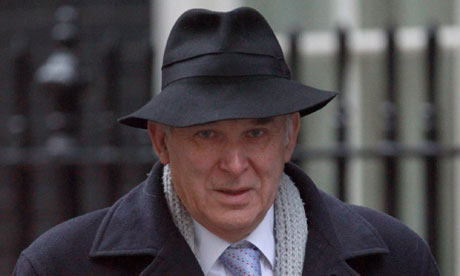
 The business secretary might well be within his rights to find a means to sue or report the paper for breach of parliamentary privilege. Today programme and Vince Cable being turned over by the Daily Telegraph in his own constituency surgery, it's a challenging day for media ethics and our ideas about privacy, let alone trust. As you must have heard by now the business secretary was interviewed without realising it by undercover reporters posing as mums worried about benefit cuts. The result: today's "I could bring down the government" headline here.
Dr Cable told the Telegraph that negotiations can be difficult within the coalition but that everyone knows he has a "nuclear option" to resign. Don't quote me outside, he told the Twickenham mums. Were the mums unshaven, I asked myself, or sporting moustaches? Didn't Vince notice anything odd?
WikiLeaks there's not really much very surprising about this. Much of the value lies in the titillation provided by clandestine methods and frank language. But we all know Cable – the cabinet's Hamlet, I call him – has been fighting semi-public battles over bank bonuses and break-ups.
US diplomatic cables (no relation) we have been reading courtesy of Mr Assange – it's to Cable's credit that he says nothing in his supposedly private conversation that is different from what he says in public. Good. It would only have been a story if he'd said something dishonest like.
Daily Mail turned over Ed Miliband's new communications chief, Tom Baldwin, in spectacular fashion on Saturday. As regular readers know, the Guardian has gone after David Cameron's man, Andy Coulson, over his role – denied – in systematic interception of private telephony traffic by reporters at the News of the World, and the curious role of Scotland Yard.
Guardian should treat both men the same, some Tory chums suggest by way of a tease. Fair point. Meanwhile, today's Times has come after the Guardian, interviewing Assange in his country retreat, under a paywall headline.
Guardian for publishing the early Wiki leaks, and then itself publishing the one about top US infrastructure targets (the Guardian decided there was no public interest and some risk to the targets in doing so), the Times has now gone back on the attack. That's what papers do.
The Telegraph has a scoop, so don't whinge, Mike" is one way of looking at it. Freedom of the press justifies entrapment of a cabinet minister, incidentally a Lib Dem cabinet minister, not a Tory. They don't like Cable. in parliament and to his Twickenham constituents. That's what he thought he was being when talking to the two wired reporters. As a local MP he has obligations of confidentiality to constituents – MPs take this very seriously and so they should. People can lose their jobs. It was a principle that Assange repeatedly raised, unembarrassed, when asked about his sexual conduct by the BBC's John Humphrys this morning. Talking about such matters "is not what a gentleman does It's not as if the tape proved that Vince likes cocaine or underage rent boys, both illegal activities and thus legitimate targets of press inquiry – as was the News of the World's Pakistani match-fixing probe, but not its hacking into royal or celeb gossip.
But the Telegraph did this only last month to Lord Young, who made some unguarded remarks about the unemployed in what he must have thought was a private lunch at an expensive West End restaurant. The tape ended up on the paper's website and he had to resign as a Cameron adviser, silly man.
He might well be within his rights to find a means to sue or report the paper for breach of parliamentary privilege – which the sting surely was in interfering with his duties as Twickenham's MP. But politicians have long been cowed and rarely take such steps unless the case is watertight and then some. Was it not the Telegraph that obtained (bought?) the discs containing all those details of MPs' expenses and ran them for weeks? It was and there was a defendable public interest in doing so, though it was much exaggerated and exploited by us all.

News.Az interviews Prof. Dr. Tayyar Ari, Uludag University, Head of Department of
 AriInternational Relations, Bursa-Turkey.
How would you comment on the famous scandal with WikiLeaks ? May this information harm US-Turkish relations?
Most of the documents released by WikiLeaks are ordinary cables which are widely used by other embassies to inform their country about the political developments and/or political figures for foreign policy process. But it is not normal that the documents which should be stay as confidential and not to be known by the public. In this context one of the immediate consequences of the WikiLeaks scandal is that diplomats as well as the politicians would hardly talk frankly especially with their American colleagues.
I don’t think that this scandal would change the relations radically. It is not realistic to expect that WikiLeaks would harm the general trend of the relations between Turkey and the United States. But from now on, most probably.
And what about Azeri-Turkish relations? Are you sure that WikiLeaks won’t affect the strategic relations between our countries?
Both sides have such strong relations and these unbreakable relations cannot be jeopardized by the alleged conversations. Since such kind of information depend on personal assessments of ambassadors or American diplomats documents released should not be taken as serious by both friend countries. It is also noticed that the objective of publication of documents are dubious, there are some suspicions about the way of revelations of documents. There might be certain reasons behind these processes like aiming to manipulate the relations of other countries and to create a crisis of confidence among them.
How successful it was?
Turkish initiatives would probably continue to reach a comprehensive solution to attain peace in the region. But as I pointed out before, the pressure of Armenian Diaspora and the policies of global powers would certainly determine the process. Let me include that Turkey is very sincere about her relation with Azerbaijan, and Turkish determination about the ending of occupation of Karabakh should not be underestimated by the Armenian side.
Do you expect progress in the Karabakh settlement in 2011?
First of all, to come to an end on this issue, a multilateral and sincere approach is needed. In this context, Turkey’s desire is to reach a solution by consistent initiatives. As Turkish Foreign Minister stated, Turkey is ready to start new initiatives to boost relations and to strength the solidarity among Turkic countries. But Turkey’s efforts would not be sufficient. So, even Karabakh problem would be taken in to account and come to table in 2011.
Turkey in delay of normalization process between the two countries. How soon it will be possible to normalize Turkish-Armenian relations?
The normalization process depend on the mutual commitments to protocols signed in Zurich at 2009, but as far as ratification is concerned Armenian side is not willing to comprehend the link the issue with the normalization process between Azerbaijan and Armenia. So as long as occupation continues, Ankara would insist not to introduce the protocol for vote to parliament and open the borders. It is very important to arrive at a comprehensive solution in Caucasia. In short, Turkey is against to separate both issues. Turkish position is very obvious. If normalization desired, first Armenia must withdraw from occupied territories.
Armenian lobby in Washington as a last resort is trying to encourage speaker Pelosi to introduce the debated Genocide resolution which was voted by House Foreign Relations Committee in March 2010. This initiative has a real potential to spoil not only the relations between Ankara and Washington but also Ankara and Yerevan. As long as Armenians reiterate the long lasting historical claims for the events of 1915, the normalization is hardly moved ahead. It is obvious that the passage of the so-called resolution in the House will most probably kill the normalization process and not make constructing contribution, while creating a new phases of crisis with Washington. Still internal policy of Armenia and the position of international Armenian community are obstructing the positive developments in bilateral relation.