
The United Nations agency tasked with curbing nuclear proliferation may have unwittingly helped Pakistan develop its atomic-weapons program because of weak internal oversight, according to documents and interviews with three former UN scientists.
UN’s International Atomic Energy Agency provided financial and technical aid to develop Pakistan’s uranium mines and improve plutonium-producing reactors even after the country tested a nuclear weapon in 1998 in defiance of a non- proliferation treaty, IAEA documents show.
Pakistan used uranium from the mines for weapons, said three former agency scientists with direct knowledge of the situation who asked not to be identified because they are prohibited from commenting by confidentiality agreements with the IAEA. Pakistan’s two atomic-energy plants run on fuel from China and uranium from Niger under IAEA safeguards.
Pakistan in furthering its nuclear-weapons program,” said Charles Ferguson, president of the Washington-based Federation of American Scientists and a physicist who has consulted for the U.S. State Department and the Energy Department.
IAEA’s failure to prevent the use of its aid for prohibited military purposes raises questions about its ability to police the nuclear material that it helps countries produce. The agency, winner of the 2005 Nobel Peace Prize, helped North Korea develop its uranium mines before the Asian country kicked inspectors out in 2003. Syria, under investigation since 2007 for what the U.S. alleges is a secret atomic-weapons program.
IAEA spokeswoman Gill Tudor, who declined three requests to address assertions that the agency helped Pakistan’s weapons program. Countries sign agreements with the agency that prohibit them from using aid for atomic bombs. IAEA has played a dual role. While best known for its inspection work in countries suspected of secretly pursuing nuclear weapons, such as Iran and Saddam Hussein’s Iraq, it also aids countries that have vowed to forgo atomic weapons in their civilian. UN agency’s help because the IAEA doesn’t follow up to make sure aid has been used for its intended purpose, said Mark Hibbs, a Berlin-based analyst at the Carnegie Endowment for International Peace, who has researched illicit nuclear networks for more than 20 years.
Pakistani IAEA Ambassador Ansar Parvez said in a Sept. 27 interview when the country assumed the rotating chairmanship of the IAEA’s board of governors. He called Pakistan “a model member” of the IAEA. Parvez didn’t respond to an e-mail yesterday seeking additional comment. Pakistan’s IAEA mission in Vienna didn’t respond to three phone calls made during business hours yesterday.
One geologist said he was denied a visit to the Dera Ghazi mine and was instead brought to help Pakistani counterparts prospect for new uranium deposits. Both scientists declined to be identified because the details of their work at the agency aren’t public. A five-year project funded in 1997, the year before Pakistan’s nuclear-bomb tests, showed the IAEA “enhanced capability in uranium exploration” in Pakistan’s Qabul Khel uranium mine, located in the violent Northwest Frontier Province, and helped lift production of yellowcake -- material needed to make bombs.
Showing posts with label interviews. Show all posts
Showing posts with label interviews. Show all posts
Pakistani Bomb Got Help From UN as Lax Oversight Weakened Nuclear Watchdog
Tuesday, December 21, 2010

Science and politics
 The White House has set some needed guidelines to limit political interference in scientific
reports used to guide public policy. The rules described by John Holdren, director of the White House Office of Science and Technology Policy, respond to charges that Bush administration officials altered or had other government officials modify scientific reports, particularly about global warming, to suit their political viewpoints.
The four pages of guidelines include "a clear prohibition on political interference in scientific processes and expanded assurances of transparencies," he wrote. Government public affairs officers are barred from asking or directing federal scientists to alter findings. Research and other data used to support policy decisions are supposed to be subjected to peer review "by qualified experts.
President Obama ordered the guidelines in response to practices in the Bush administration, when Council on Environmental Quality staffers made nearly 300 changes to a document on climate change to downplay the link between human activity and climate change.
However, the Obama administration was forced to defend its own actions recently when allegations were raised that the White House had edited a drilling safety report following the BP oil spill in the Gulf of Mexico. The changes made it appear that the scientists supported President Obama's ban on deep-water drilling. But to get to this point, John Holdren, director of the White House Office of Science and Technology Policy, may have battled through the bureaucratic equivalent of the Napoleonic Wars.
Holdren finally released a long-promised set of guidelines for scientific integrity in US government departments and agencies. On the White House website Holdren wrote that the document includes "a clear prohibition on political interference in scientific processes and expanded assurances of transparency". He also wrote that department and agency heads would have 120 days to demonstrate progress towards implementing the new rules.
Watchdog groups who campaign for sound science in government decision-making gave the guidelines a cautious reception. "We will just have to wait and see what the agencies do with it," says Francesca Grifo of the Union of Concerned Scientists (UCS), headquartered in Cambridge, Massachusetts.
Obama issued a memorandum on scientific integrity that forbade the distortion of science for political ends. The move seemed to signal a clear departure from practices adopted during the administration of President George W. Bush, which faced accusations of weakening the role of science in regulatory agencies and of muzzling scientists whose views were at odds with those of the White House.
The guidelines, expected in July 2009, became mired in unwieldy discussion as Holdren struggled to get all relevant departments and agencies to accept a common set of principles. The US Department of the Interior issued a draft policy earlier this year, only to backtrack after advocacy groups slammed it as incomplete and ambiguous. Following the oil spill in the Gulf of Mexico in summer 2010, the Obama administration was itself accused of suppressing scientific information to put a better gloss on the situation.
It directs agencies to "ensure that the data and research used to support policy decisions undergo independent peer review", to adopt protection for whistleblowers and to "facilitate the free flow of scientific and technological information".
whose research focuses on the intersection of public policy with science, questions why it has taken so long to issue such a limited document. "It sets forth discussion questions about scientific integrity in government, but I don't think it resolves them," he says. Pielke says that given how long it took to create the document, there may not be time for much progress before the end of Obama's term of office in 2012. It was a very long wait for four pages," says Jeff Ruch of Public Employees for Environmental Responsibility (PEER), based in Washington DC, which has represented several scientist whistleblowers. "We feel frustrated that this process is horribly off schedule." Ruch says that several sentences have the potential to make things worse, rather than better, for government scientists. For example, the guidelines say that researchers can speak to the media, provided there has been "appropriate coordination" with public-affairs offices, but they fail to define what is appropriate. They also allow scientists to speak publicly about their "official work" but fail to offer protection for scientists who are judged to have spoken up in their private capacity.
She points to sections that unambiguously allow government scientists to serve on the boards of scientific societies and journals, to present findings at scientific conferences and to accept awards and honours for the science they do. These are major issues, she adds, because the UCS has heard from government scientists who have been prevented from doing these things in the past because of a perceived conflict of interest.
James Hansen, head of the NASA Goddard Institute for Space Studies in New York City, who became well known for speaking out publicly about censorship of his scientific work by NASA press offices during the Bush administration, says that the new policy does not change either of what he sees as two central problems; the use of political appointees to run public-affairs offices, and the requirement that the White House screen testimonies that scientists make to Congress.
Hajj scam probe: Supreme Court warns FIA DG against adopting leniency

Meanwhile, the six-member special bench hearing the case directed Federal Minister of Science and Technology, Azam Khan Swati to submit documentary evidence substantiating scale of massive corruption in Haj affairs till December 13. Swati insisted that Federal Minister for Religious Affairs, Hamid Saeed Kazmi was the 'lynchpin' in the Haj affairs corruption case.
Waseem Ahmed informed that the corruption was of millions of rupees however, recovery had yet to be made. FIA chief's statement that an "interview" of Minister for Religious Affairs has been conducted prompted Justice Khalilur Rehman Ramday to ask him under which law he had ordered "interview" and why statement of the minister was not recorded according to the law.
TV anchor that you are conducting interviews instead of recording statements," questioned Justice Ramday but Waseem Ahmed, DG FIA even did not know the relevant provision of the law meant for recording statement of an accused. Chief Justice Iftikhar Muhammad Chaudhry observed "this novel procedure of investigation is not understandable.
He referred to several provisions of law that were to be incorporated in the FIR and said it entails provisions of bailable and lesser punishment. Earlier, Waseem Ahmed told the bench that in view of the recommendations of the committee of two senators and three MNAs the FIR was registered in the case.
During the hearing, former Director General Haj, Rao Shakeel denied allegations of corruption and said that accommodation for all the pilgrims was hired on merit. He said that he dismissed an officer Ahmed Faiz on corruption charges. The court directed him as well to submit his statement on or before the next date of hearing.
Dr Khalid Mehmood Soomro, a parliamentary committee member who recently visited Saudi Arabia, accusing officials of the Haj Directorate of involvement in corrupt practices, complaints sent by three members of the National Assembly and two of the Senate, a letter sent to the Chief Justice by Saudi Prince Bandar Bin Khalid Bin Abdul Aziz Al-Saud alleging embezzlement and a number of applications received by Justice Ramday in person during the performance of Haj from pilgrims narrating their ordeals and complaining about corruption and mismanagement in Haj arrangements. In addition, 22 pilgrims had submitted an application.
Religion review of the year 2010
During one of his more unusual interviews, given to a comedian at a football ground on Bonfire Night, the Archbishop of Canterbury was asked what his favourite firework was. Scarcely pausing for breath, he replied: "I think the wrong answer to that would be 'a Roman Candle.'"
 Benedict XVI's full state visit to Britain in September was the first by any pope for 400 years.
He was given the warmest of welcomes from the Queen, the Prime Minister, hundreds of thousands who lined the streets, and leaders of all the major faiths, including Dr William. the Roman Catholic Church was once again pitted against the Church of England in what some commentators saw as the greatest struggle for the souls of Anglicans since the Reformation.
October saw the first anniversary of Benedict XVI's historic - and hugely contentious - offer to accommodate conservative Anglicans who could not accept the ministry of women bishops.
‘Millennials’ Least Religious Group in American History
 Millennials. There are more than 78 million of them. Born between 1980 and 2000, this demographic has surpassed the baby boomers as the largest and most influential generation in America.
Millennials are shaping the first half of 21st century of American culture. How could this impact Christianity as this age group reaches adulthood and prepares to exert their mark on the nation? Best-selling research author Thom Rainer and his son Jess, himself a Millennial born in 1985, have some answers—and they appear disturbing.
The father-son team is presenting the most comprehensive research project on Millennials from a Christian worldview perspective in their book, The Millennials: Connecting to America's Largest Generation. The duo started researching the project in June 2009, conducting 1,200 interviews that aim to help us better understand Millennials personally, professionally and spiritually.
Although Millennials still say they are “spiritual,” this group is the least religious generation in American history. Only 13 percent of Millennials considered any type of spirituality to be important in their lives. In fact, most Millennials don’t think about religion at all. Although 84 percent of Millennials say job success is important to them, they are not workaholics. They want to have fun with their co-workers on the job, and they see the need for balance between work and life. They expect the federal government to be a solution to many social problems, such as universal health care and retirement.
AP Interview: Malaysia gay man gets threats
A Muslim gay man in Malaysia says he fears for his safety after speaking about his sexuality in an Internet video that attracted online death threats and accusations by religious authorities that he is insulting Islam. The Associated Press in a telephone interview Tuesday he was taking safety precautions following fierce criticism in this conservative, Muslim-majority country over his clip, which has been viewed more than 140,000 times on YouTube in just six days.
I'm Gay, I'm OK," features the 32-year-old engineer encouraging other gay Malaysians to be confident in themselves. It is part of a series of interviews posted online by gay rights activists since last week, but Azwan has attracted heavy attention because he is the only one from Malaysia's ethnic Malay Muslim majority so far. "I don't know what to expect next," Azwan said Tuesday in his first comments to the media after his nearly three-minute clip was posted Dec. 15. Other gay Malaysians featured in the "Independent Sexuality" video campaign so far are mainly ethnic Chinese non-Muslims, who generally face less of a public stigma about homosexuality.
He has also made his personal details more private on social media websites. Although Azwan's face appears clearly in the video, he declined to be photographed for the AP interview. but he said his lawyer friend was checking whether other legal action could be taken against him. Sodomy is punishable by 20 years in prison, though the law is only occasionally enforced. Some states impose fines or jail terms for gay-related actions such as cross-dressing in public.
Several more Malay Muslims are expected to speak in upcoming clips, which are meant to tell young gay Malaysians not to despair about their future. Azwan told the AP. "I just wanted to represent gay Malays in this project. I hope these videos will help to create a more open society and more discussion.
Democrats wondering who can run against Bobby Jindal for governor in 2011

He spent the last three years essentially fundraising," said Joshua Stockley, an assistant professor of political science at the University of Louisiana-Monroe who closely follows state politics. "I think personally it would be a waste of time or resources for anybody to run against him at this point.
Democratic Party leaders acknowledge the difficult playing field, but said there is still time to make the race competitive. "Without getting into names, I do know some folks are talking it over with their families over the holidays," said Renee Lapeyrolerie.
Jindal had $7.2 million in his campaign account as of last February, and has been criss-crossing the country in recent months collecting more. It would surprise few observers if he had more than $10 million in the bank when the next disclosure reports. Jindal spent just over $11 million to win the office four years ago in an election year when two self-financed candidates, John Georges and Walter Boasso, spent $12 million and $7 million, respectively. Four years earlier, Jindal and his Democratic runoff opponent, Kathleen Blanco, spent less than $10 million between them.
Democratic Party during Blanco's term and has often flirted with running in the past. The founder and chief executive of one of Louisiana's two Fortune 500 companies, Bernhard has been an outspoken advocate for higher education, a topic likely to be front-and-center in the coming budget debate.
Bobby Jindal is the best politician that Louisiana's ever seen. And that's not a compliment," said Sen. Joe McPherson, D-Woodworth, a vocal Jindal opponent in the Legislature. "With the tremendous war chest he has, and even though he's slipping fairly fast in the polls, I don't think it will catch up with him in time for somebody to wage a credible campaign against him.
That's when incumbent President George H.W. Bush had job-approval ratings approaching 90 percent just 20 months before an election where he ultimately won just 38 percent of the popular vote.
We always run like we're behind. We never take anything for granted," Jindal said. "The best way for me to earn the chance to be governor for the next four years is not to worry about polls, not to worry about who my opponent may be, or to worry about anything in the political department.
That's a 13-point drop since April 2009 and 22 points down from his peak after taking office.
While the governor is at the top of the ticket, voters also will be choosing a lieutenant governor, secretary of state, attorney general, agriculture commissioner, insurance commissioner and treasurer. All but one of those offices are now held by Republicans. Every seat in the state House and Senate also will be up for grabs, and Lapeyrolerie said the party will pay particular attention to capturing the seats held by the Democrats who recently switched to the GOP.
We're Not 'Gun-Shy' On Prosecuting Politicians, We Just Can't Prove Our Cases by Lanny Breuer
 Jerry Lewis (R-CA). Former Rep. Tom DeLay (R-TX). Rep. Don Young (R-AK). Rep. Alan Mollohan (D-WV). What do all these politicians have in common? Despite being embroiled in scandal, all have announced in the past year that the Justice Department wouldn't be pursuing charges against them. That has put DOJ in the crosshairs of good government groups, who say they've appeared weak by shutting down high-profile investigations of members of Congress.
Exactly what will a politician have to do for the Department of Justice to sit up and take notice?" Melanie Sloan, executive director of Citizens for Responsibility and Ethics in Washington (CREW), said this month.
Assistant Attorney General Lanny Breuer told theNYT's Charlie Savage. "If a case cannot be brought, it's because we've taken a hard look and made the determination that this case cannot be proved beyond a reasonable doubt. And with all due respect to those outside the department, they haven't seen the evidence.
Conduct that people think is reprehensible or immoral doesn't mean it's criminal," Breuer said. "If there is a criminal case to bring, we'll bring it. If there isn't one to be brought -- no matter if we like the conduct or don't like the conduct, like the people or don't like the people.
I understand why the question is asked," said Jack Smith, who took over the Public Integrity Section six months ago. "But if I were the sort of person who could be cowed -- 'I know we should bring this case, I know the person did it, but we could lose, and that will look bad.
Solving basic problems and resistance

Terrorism is Turkey’s most important problem. It is certain that solving this problem, which is a manifestation of the Kurdish problem and has left its mark on the last 30 years, will not be easy. However, the conviction that substantial progress had been made in solving the Kurdish problem and that organized attacks will decline as of 2011 due to the lack of support for terrorism is spreading.
rns of the Alevi population. The government is taking these steps one by one. Turkey has made unprecedented progress in solving this centuries-old problem. There are more steps that need to be taken. Final touches are being made to the status of the cem evi.
Turkey have led to a waste of sources and the government to focus solely on some issues, which in return caused other current topics to turn into problems. The grueling effect of basic problems on the government paved the way to “political instability.
The Cyprus issue, the Armenian issue and the Aegean continental shelf were the main problems challenging the government and reinforcing dependence on foreign support.
Good intentions concerning solving the Turkish Republic of Northern Cyprus (KKTC) and Turkey problem have at least encouraged the international community to develop a more objective perspective of the problem. those displeased with efforts to solve the problem continue to show resistance. The efforts of those whose misery can be read in their eyes are being stored in people memories as “negative” resistance.
2010 will be remembered as the year that closed one era in solving basic problems. 2010 was the year in which those who resisted solutions lost strength and popularity. 2011, which will open the door to a new era, is preparing to become a new milestone in solving basic problems.
My Jakarta:Najwa Shihab TV Journalist

He’s admitted to murdering 14 kids. I felt like I was talking to true evil. He played like he was innocent and expressed absolutely no guilt. He thought what he did was fair because of what his family had done to him when he was a kid. I asked him what punishment he thought he deserved and he said he deserved an apology. I couldn’t hide the anger in my face and my voice became high and started to tremble. I was so emotional.
Is there any meaning or philosophy behind the title of your show, ‘Mata Najwa’?
Hopefully I can represent the public’s questions and opinions on current issues or even longstanding issues. I also want people to be able to learn things they might not have known before tuning in.
What makes you sure that your questions and opinions represent public opinion?
We collect all the information we can get our hands on and find appropriate sources to interview on the show. First of all, we try not to think of things from a completely journalistic standpoint. We ask ourselves what questions everyday people might ask off the top of their heads when they hear about an issue.
Tell us the dos and don’ts of being a good interviewer.
Don’t face your sources with an empty head. With in-depth research you can predict the answers and the outcomes of the interviews. That way you can have your interviews under control.
What are your favorite topics?
Every issue has an interesting side to it. But political and legal issues are my favorite topics because of my background. Although I do have to say that a lot of the time political issues get on my nerves, because those politicians keep telling lies over and over again and at the end of the show the political issue at hand has rarely been made any clearer, or resolved.
Would you say that talking to politicians is the most intriguing part of your job?
Talking to sources that want to share their stories about accepting bribes from politicians — now that’s exciting. We have to cover our sources’ faces on the show while they tell us about how politicians have bribed them to organize demonstrations, for example.
Is there anyone you’ve not yet spoken to who you would love to have sitting across from you on the show?
Suharto, on my show. I wonder if he was actually really sorry for what he had done. And I would like to know what his biggest regret was. He’s also one of the keys figures of Indonesian history. I’m sure the public would be eager to see a show like that.
Do you ever think of throwing your hat in the political ring?
But at the end of the day I’m in love with journalism. I can provoke thought and help the public to decide for themselves what’s good for them. Playing the devil’s advocate is pretty interesting.
I admire Desi Anwar. She trained all the news presenters at Metro TV and she’s really smart. From outside Indonesia, I like Rachel Maddow, from MSNBC.
Care to give a prediction about Jakarta in the next five years?
I believe there will be total gridlock in Jakarta. We might find malls on every block and more skyscrapers and even less green space. I’m still hoping we can have an MRT within the next five years, though.
Vince Cable and the Telegraph sting – should he sue?
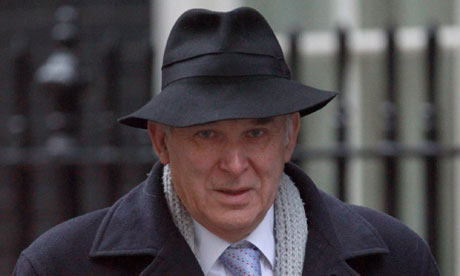 The business secretary might well be within his rights to find a means to sue or report the paper for breach of parliamentary privilege. Today programme and Vince Cable being turned over by the Daily Telegraph in his own constituency surgery, it's a challenging day for media ethics and our ideas about privacy, let alone trust. As you must have heard by now the business secretary was interviewed without realising it by undercover reporters posing as mums worried about benefit cuts. The result: today's "I could bring down the government" headline here.
Dr Cable told the Telegraph that negotiations can be difficult within the coalition but that everyone knows he has a "nuclear option" to resign. Don't quote me outside, he told the Twickenham mums. Were the mums unshaven, I asked myself, or sporting moustaches? Didn't Vince notice anything odd?
WikiLeaks there's not really much very surprising about this. Much of the value lies in the titillation provided by clandestine methods and frank language. But we all know Cable – the cabinet's Hamlet, I call him – has been fighting semi-public battles over bank bonuses and break-ups.
US diplomatic cables (no relation) we have been reading courtesy of Mr Assange – it's to Cable's credit that he says nothing in his supposedly private conversation that is different from what he says in public. Good. It would only have been a story if he'd said something dishonest like.
Daily Mail turned over Ed Miliband's new communications chief, Tom Baldwin, in spectacular fashion on Saturday. As regular readers know, the Guardian has gone after David Cameron's man, Andy Coulson, over his role – denied – in systematic interception of private telephony traffic by reporters at the News of the World, and the curious role of Scotland Yard.
Guardian should treat both men the same, some Tory chums suggest by way of a tease. Fair point. Meanwhile, today's Times has come after the Guardian, interviewing Assange in his country retreat, under a paywall headline.
Guardian for publishing the early Wiki leaks, and then itself publishing the one about top US infrastructure targets (the Guardian decided there was no public interest and some risk to the targets in doing so), the Times has now gone back on the attack. That's what papers do.
The Telegraph has a scoop, so don't whinge, Mike" is one way of looking at it. Freedom of the press justifies entrapment of a cabinet minister, incidentally a Lib Dem cabinet minister, not a Tory. They don't like Cable. in parliament and to his Twickenham constituents. That's what he thought he was being when talking to the two wired reporters. As a local MP he has obligations of confidentiality to constituents – MPs take this very seriously and so they should. People can lose their jobs. It was a principle that Assange repeatedly raised, unembarrassed, when asked about his sexual conduct by the BBC's John Humphrys this morning. Talking about such matters "is not what a gentleman does It's not as if the tape proved that Vince likes cocaine or underage rent boys, both illegal activities and thus legitimate targets of press inquiry – as was the News of the World's Pakistani match-fixing probe, but not its hacking into royal or celeb gossip.
But the Telegraph did this only last month to Lord Young, who made some unguarded remarks about the unemployed in what he must have thought was a private lunch at an expensive West End restaurant. The tape ended up on the paper's website and he had to resign as a Cameron adviser, silly man.
He might well be within his rights to find a means to sue or report the paper for breach of parliamentary privilege – which the sting surely was in interfering with his duties as Twickenham's MP. But politicians have long been cowed and rarely take such steps unless the case is watertight and then some. Was it not the Telegraph that obtained (bought?) the discs containing all those details of MPs' expenses and ran them for weeks? It was and there was a defendable public interest in doing so, though it was much exaggerated and exploited by us all.

whom I sometimes criticise for excessive aggression but who played this assignment with probing skills. As you'd expect Assange sounds complicated, he makes good points and some, political and personal, that made me flinch.
'It is very important to arrive at a comprehensive solution in Caucasia'
News.Az interviews Prof. Dr. Tayyar Ari, Uludag University, Head of Department of
 AriInternational Relations, Bursa-Turkey.
How would you comment on the famous scandal with WikiLeaks ? May this information harm US-Turkish relations?
Most of the documents released by WikiLeaks are ordinary cables which are widely used by other embassies to inform their country about the political developments and/or political figures for foreign policy process. But it is not normal that the documents which should be stay as confidential and not to be known by the public. In this context one of the immediate consequences of the WikiLeaks scandal is that diplomats as well as the politicians would hardly talk frankly especially with their American colleagues.
I don’t think that this scandal would change the relations radically. It is not realistic to expect that WikiLeaks would harm the general trend of the relations between Turkey and the United States. But from now on, most probably.
And what about Azeri-Turkish relations? Are you sure that WikiLeaks won’t affect the strategic relations between our countries?
Both sides have such strong relations and these unbreakable relations cannot be jeopardized by the alleged conversations. Since such kind of information depend on personal assessments of ambassadors or American diplomats documents released should not be taken as serious by both friend countries. It is also noticed that the objective of publication of documents are dubious, there are some suspicions about the way of revelations of documents. There might be certain reasons behind these processes like aiming to manipulate the relations of other countries and to create a crisis of confidence among them.
How successful it was?
Turkish initiatives would probably continue to reach a comprehensive solution to attain peace in the region. But as I pointed out before, the pressure of Armenian Diaspora and the policies of global powers would certainly determine the process. Let me include that Turkey is very sincere about her relation with Azerbaijan, and Turkish determination about the ending of occupation of Karabakh should not be underestimated by the Armenian side.
Do you expect progress in the Karabakh settlement in 2011?
First of all, to come to an end on this issue, a multilateral and sincere approach is needed. In this context, Turkey’s desire is to reach a solution by consistent initiatives. As Turkish Foreign Minister stated, Turkey is ready to start new initiatives to boost relations and to strength the solidarity among Turkic countries. But Turkey’s efforts would not be sufficient. So, even Karabakh problem would be taken in to account and come to table in 2011.
Turkey in delay of normalization process between the two countries. How soon it will be possible to normalize Turkish-Armenian relations?
The normalization process depend on the mutual commitments to protocols signed in Zurich at 2009, but as far as ratification is concerned Armenian side is not willing to comprehend the link the issue with the normalization process between Azerbaijan and Armenia. So as long as occupation continues, Ankara would insist not to introduce the protocol for vote to parliament and open the borders. It is very important to arrive at a comprehensive solution in Caucasia. In short, Turkey is against to separate both issues. Turkish position is very obvious. If normalization desired, first Armenia must withdraw from occupied territories.
Armenian lobby in Washington as a last resort is trying to encourage speaker Pelosi to introduce the debated Genocide resolution which was voted by House Foreign Relations Committee in March 2010. This initiative has a real potential to spoil not only the relations between Ankara and Washington but also Ankara and Yerevan. As long as Armenians reiterate the long lasting historical claims for the events of 1915, the normalization is hardly moved ahead. It is obvious that the passage of the so-called resolution in the House will most probably kill the normalization process and not make constructing contribution, while creating a new phases of crisis with Washington. Still internal policy of Armenia and the position of international Armenian community are obstructing the positive developments in bilateral relation.
Subscribe to:
Posts (Atom)
Popular Posts
-
hello guys.mera naam raj hai.me aako apni story sunaane jaa raha hoo hum punjabi hai.aur punjabi arto ki sundarta to aap jaante hi honge .hu...
-
"MUSIC"ALLAH Pak ki narazgi ka sabab hai. Agar aap k number par call karty waqt gaanay ki awaz aati ho to usay khatam karen,ta k a...
-
Full Name: Kajol Mukherjee Profession: Actress Star Sign: Leo DOB: 5 August, 1975 Place of Birth: Altamount Road, Mumbai, ...


